
LOT PS-2307 PASS
PEP-BPC157 COA verifiedRUO
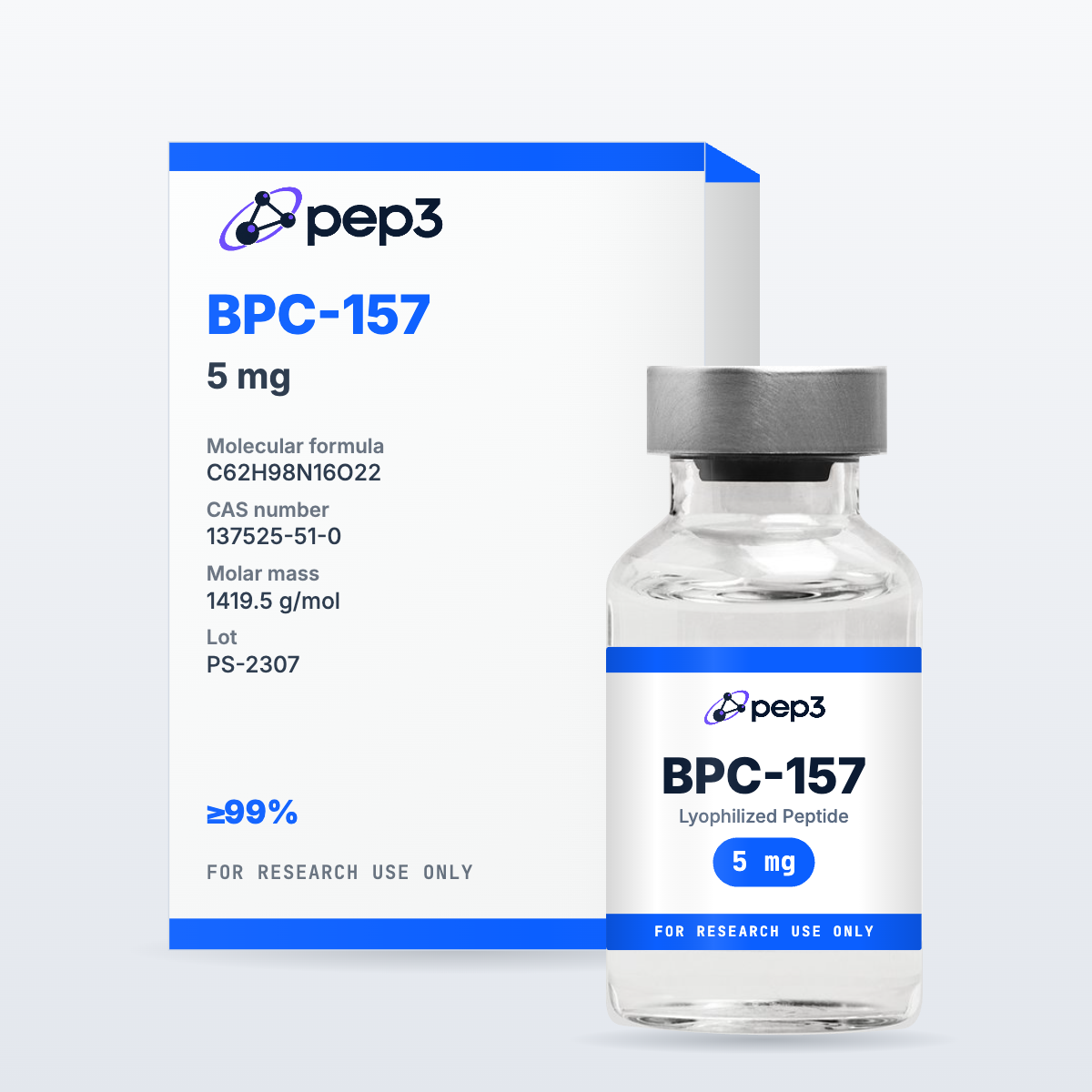
BPC-157
Price range: $39.00 through $69.00
A synthetic 15-amino-acid peptide derived from a protective protein found in gastric juice, widely studied in tissue-repair models.
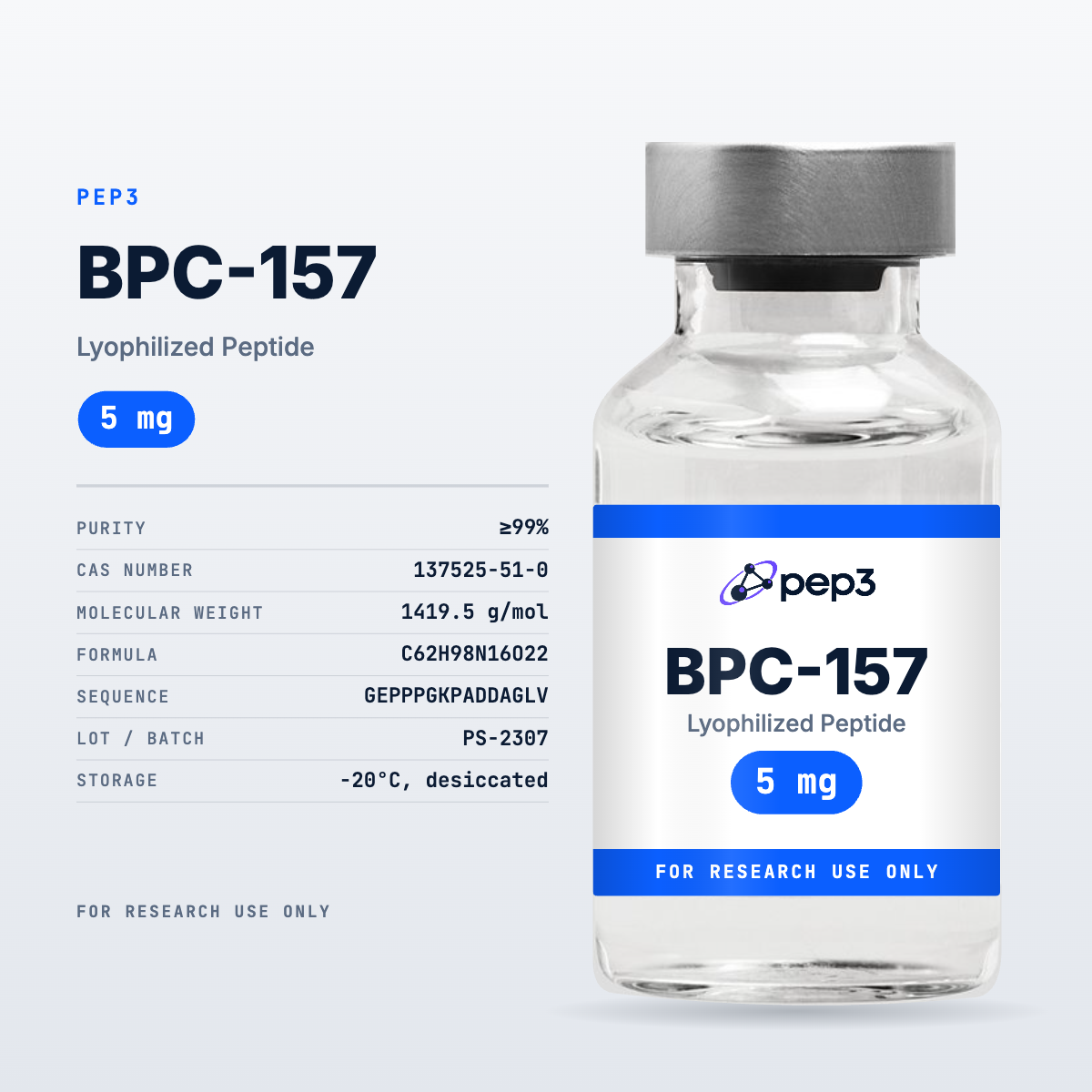
- Purity
- ≥99%
- Mol. weight
- 1419.5 g/mol
- CAS
- 137525-51-0
- Form
- Lyophilized powder
Research area
- HPLC verified
- Batch COA
- Cold-packed
- Ships in 24h
This product is intended for laboratory research use only. Not for human or animal consumption.
SKU: PEP-BPC157
- Product Overview
- Description
- Research Applications
- Mechanism of Action
- Key Research Benefits
- Studies
A synthetic 15-amino-acid peptide derived from a protective protein found in gastric juice, widely studied in tissue-repair models.
BPC-157 is supplied at ≥99% purity as verified by HPLC, with identity confirmed by mass spectrometry. Every vial is labelled with a lot number traceable to its Certificate of Analysis.
Information provided for laboratory research reference only.
Description
A synthetic 15-amino-acid peptide derived from a protective protein found in gastric juice, widely studied in tissue-repair models.
Each lot is synthesised by solid-phase peptide synthesis, purified by preparative HPLC and released only after independent analytical testing. Supplied as a lyophilized powder in a sealed glass vial.
For laboratory research use only. Not for human or veterinary use.
BPC-157 is used by investigators in the following research areas:
- Preclinical models of tendon, ligament and muscle repair
- Gastrointestinal mucosal integrity research
- Angiogenesis and wound-healing assays
- Nitric oxide signalling studies
Information provided for laboratory research reference only.
In preclinical research BPC-157 has been reported to interact with the nitric oxide system and to modulate growth-factor signalling associated with angiogenesis (including VEGF-related pathways). Studies have also examined its influence on fibroblast migration and collagen organisation.
Information provided for laboratory research reference only.
- Highly stable in aqueous solution compared with many peptides
- Extensively referenced in preclinical literature
- Suitable for in-vitro and in-vivo research models
- Supplied with batch-specific COA
Information provided for laboratory research reference only.
BPC-157 has been examined in a body of peer-reviewed preclinical literature. Researchers should consult primary sources for study design, models and findings.
Referenced literature is provided for scientific context only and does not imply suitability for any use outside the laboratory.
Information provided for laboratory research reference only.
Compound Information
Chemical identity and handling data
Body Protection Compound-157C62H98N16O22
Purity≥99%Sequence 15 aa
GEPPPGKPADDAGLV
| Synonyms | BPC 157, PL 14736 |
|---|---|
| Molecular formula | C62H98N16O22 |
| Molecular weight | 1419.5 g/mol |
| CAS number | 137525-51-0 |
| PubChem CID | 9941957 ↗ |
| Purity | ≥99% |
| Amount per vial | 5 mg / 10 mg |
| Form | Lyophilized powder |
| Appearance | White to off-white powder |
| Solubility | Water, bacteriostatic water |
| Storage | -20°C, desiccated, protected from light |
| Peptide class | Pentadecapeptide |
Certificate of Analysis
Independent batch testing results
Every batch is independently tested. Match the lot number printed on your vial with the certificate below.
LOT PS-2107 PASS
Specifications
Sizes and product attributes
| Size | 5 mg, 10 mg |
|---|
Reconstitution Calculator
Plan concentration and syringe units for this vial
Concentration—mcg / mL
Volume to draw—mL
Syringe units—units (U-100)
Doses per vial—doses
Frequently Asked Questions
Handling, storage and documentation
Q01How should BPC-157 be stored?
Store the lyophilized vial at -20°C, protected from light and moisture. After reconstitution, keep refrigerated at 2–8°C and use within the timeframe appropriate to your protocol.
Q02How do I reconstitute the vial?
Allow the vial to reach room temperature, then slowly add bacteriostatic water down the side of the vial and swirl gently — do not shake. Use our reconstitution calculator to plan concentrations.
Q03Where can I find the COA for my vial?
Match the lot number printed on your vial label with the certificate in the COA tab or in our COA library.
Researcher Reviews
Feedback from verified buyers
Related research compounds
-
 COA

Reviews
There are no reviews yet.